
Dental implants are the best option for replacing teeth because they work more like real teeth compared to other tooth replacement options. However, the process of getting new teeth with implants is more extensive because it involves more steps.
Dr. Joseph Thompson discusses the dental implant process as it will take place at his Greeley, CO dental practice. It’s important that patients know exactly what to expect when getting dental implants.
The Dental Implant Process
The first and most important step in getting dental implants is a full dental exam. This helps Dr. Thompson figure out if implants are a good option for you. He’ll take X-rays or CT scans to check your jawbone strength and the health of your gums and nearby teeth.
Once he understands your oral health and what you need, we’ll create a personalized treatment plan. This plan will outline exactly how your missing teeth will be replaced with implants. Our specialists will make sure everything is safe and works well for the long term.
Step 1: Addressing Underlying Dental Problems
If you have any underlying dental issues, Dr. Thompson will have to address them first. This includes gum disease, tooth decay, or infections. You may simply need a deep cleaning or more intense treatment.
Some patients need bone grafting too. If your jawbone isn’t thick enough or too soft to support dental implants, a bone graft will help build the bone back up. This procedure takes bone tissue from another part of your body and transplants it into the jawbone. The new tissue will fuse to the existing bone and create a strong base for the implants.
Step 2: Placing the Dental Implants
Once your mouth is healthy and ready, the next step is to get your dental implants. Dr. Thompson or the oral surgeon will surgically place the implant posts into your jawbone. This surgery involves making a small incision in the gum tissue to expose the bone.
Then they’ll drill a hole in the bone and insert the implant. They’ll stitch up the gum tissue and let your mouth heal while the implants fuse with the bone. In most cases, Dr. Thompson can place a temporary restoration on top so you won’t have to go long without teeth.
Step 3: Bone Growth and Healing Time
This is a critical part of the implant process, but it also takes the longest. In about 3 to 6 months, the bone tissue will grow and fuse to the implant fixtures during a process called osseointegration. This process allows the implant to fuse securely with your jawbone, almost like they become one. This creates a strong base that acts just like a natural tooth root, providing reliable support for your new tooth.
Because this step is so important, it’s essential to keep your mouth very clean while you heal. Be sure to follow all the after-care instructions we give you, and don’t forget to brush and floss regularly. Taking these simple steps helps prevent infection and ensures your implant heals the right way.
Step 4: Placing the Abutments
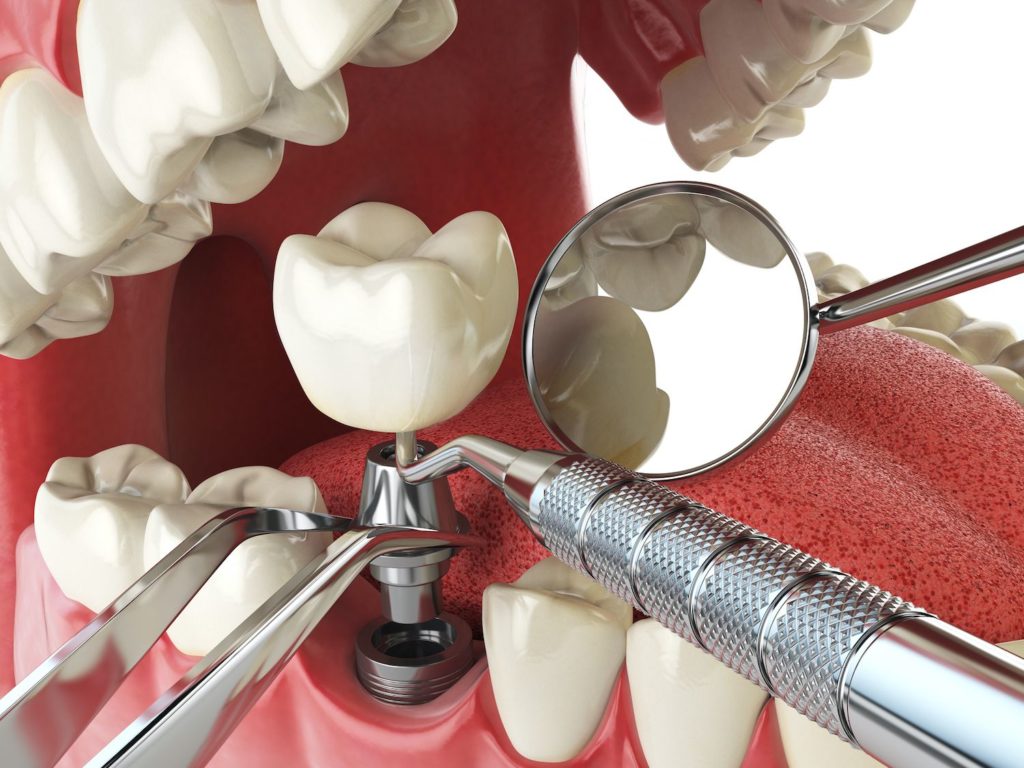
When the implant fixtures are fully fused with the jawbone, your dentist will open up the gums to access the implants. Then he’ll secure the abutments to the top of each implant. The abutment is a small connector piece that protrudes above the gum line. The abutment will hold the dental restoration, crown, denture, or bridge.
Step 5: Securing the Dental Restoration
Finally, Dr. Thompson will secure your dental restoration, or the false teeth. This will be a dental crown, dental bridge, or denture. They type of restoration you need depends on how many teeth you’re missing. This will take place at your very last appointment. With a well-planned treatment plan, securing your restoration should be simple.
At your final appointment, Dr. Thompson will attach your new false tooth or teeth. This could be a crown, bridge, or denture, depending on how many teeth you’re missing. Thanks to the careful planning from the start, this last step is usually quick and straightforward. Before you know it, you’ll leave with a completely new smile.
Learn more about our dental implant services:
- Implant Dentistry: An Overview
- Additional Dental Implant FAQs
- What are Dental Implants?
- The Benefits of Dental Implants
- Dental Implants vs Dentures
- Dental Implants Cost
Patient Review
Frequently Asked Questions About The Process
Is the dental implant procedure painful during or after surgery?
The procedure isn’t painful because your dentist will numb the area with local anesthesia. You may feel mild pressure, but not pain. After surgery, it’s normal to have some soreness, swelling, or bruising for a few days. Most patients manage it easily with over-the-counter pain medicine.
What type of anesthesia is used for dental implant placement?
Most dental implants use local anesthesia, which numbs the area but keeps you awake. For patients with anxiety or multiple implants, we may offer oral sedation, IV sedation, or nitrous oxide. Dr. Thompson will choose the safest option based on your needs and comfort level.
How soon after a tooth extraction can I get a dental implant?
In some cases, an implant can be placed the same day as the extraction. In others, Dr. Thompson may wait a few weeks to months for the area to heal and for bone to fill in. The timing depends on your bone condition and whether infection or bone loss is present.
Can I get implants on both the top and bottom jaw at the same time?
Yes, you can get implants on both jaws during the same procedure if your oral health and bone levels are good. This is common in full-mouth restorations or when replacing teeth in both arches. Dr. Thompson will plan carefully to ensure a safe and smooth recovery.
How strong are implants compared to my natural teeth?
Dental implants are very strong and can handle normal chewing forces just like natural teeth. In some cases, they’re even more stable because they don’t rely on surrounding teeth for support. However, just like real teeth, they need proper care to stay healthy and last.
Do the implants ever need to be replaced later on?
The implant post itself can last a lifetime if cared for properly. However, the crown or bridge attached to it may wear down over 10–15 years and need replacement. Regular dental checkups help catch wear or damage early, so it can be repaired or replaced when needed.
Is there a risk of nerve damage during implant placement?
Yes, but the risk is low. Nerve damage can happen if an implant is placed too close to a major nerve, especially in the lower jaw. Dr. Thompson will use X-rays or 3D scans to map out the safe placement carefully. If numbness or tingling happens after surgery, it’s usually temporary, but report it immediately.
The dental implant process is a complex and multi-step process that needs careful planning, preparation, and execution. Dr. Thompson would like to meet with you to discuss the dental implant process in Greeley, CO if you’re considering them. Contact our office at 970-205-9614 or request an appointment online to get started today.